
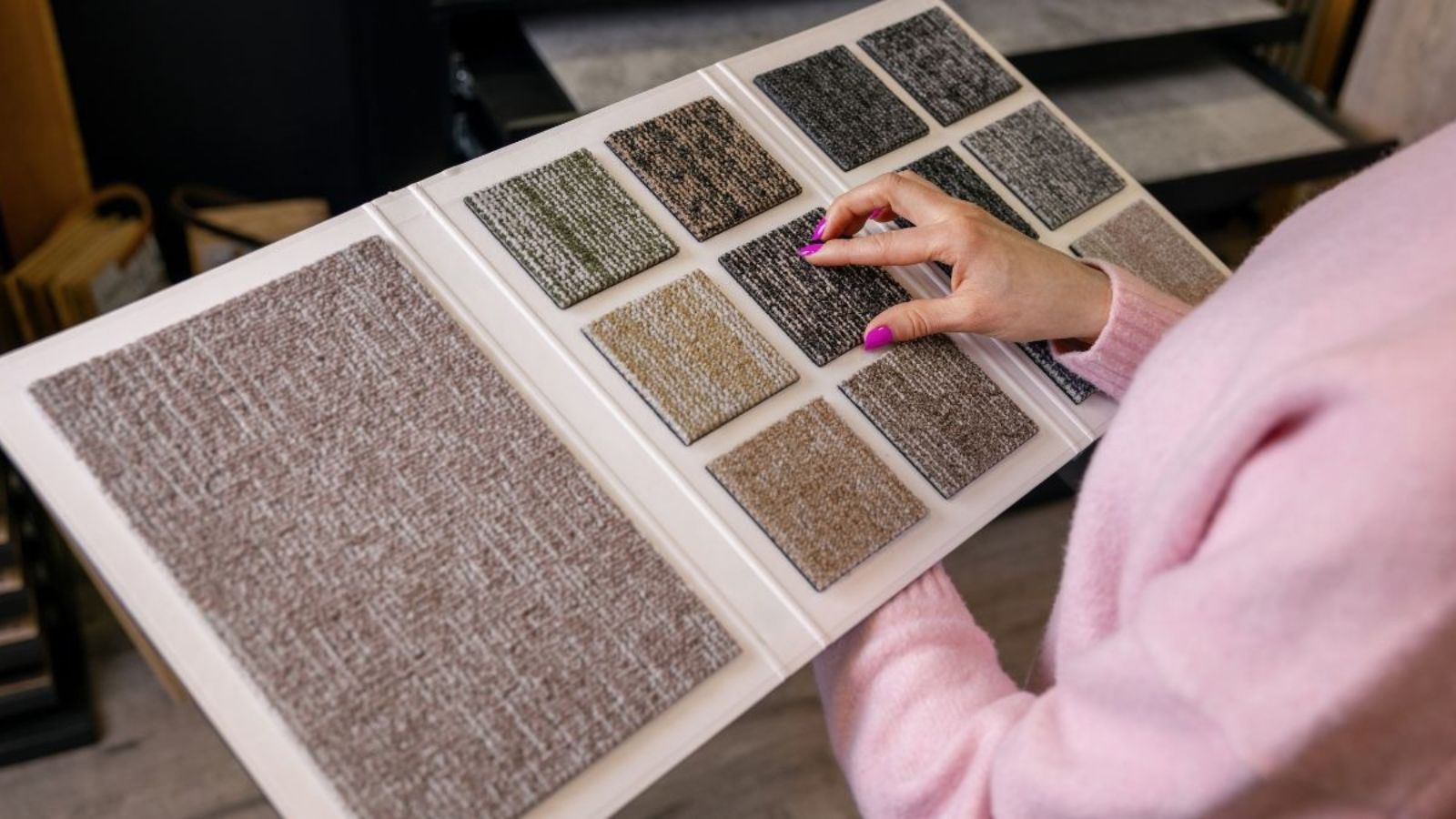
Two carpet samples can look similar but perform differently after years of daily use. Understanding carpet face weight, density, and twist helps you compare specifications and choose flooring that fits your home, traffic levels, and budget.
These measurements describe different aspects of carpet construction. None guarantees durability on its own, so consider them alongside fiber type, pile style, padding, and warranty coverage.
Face Weight, Density, and Twist Measure Different Things
Carpet specifications can be confusing because the measurements describe separate characteristics.
- Face weight: The weight of the carpet pile fibers per square yard, excluding the backing. A higher number means more pile fiber by weight, but it does not automatically indicate better quality.
- Density: How closely the pile fibers are packed together. Density is influenced by face weight and pile height and can help indicate how well the pile may resist crushing.
- Twist: The number of turns in the carpet yarn, typically measured per inch. Twist helps determine how the yarn holds its shape and contributes to the carpet’s surface appearance.
These measurements work together, but they are not interchangeable. Two carpets with the same face weight may have different pile heights and densities. Likewise, tightly twisted yarn does not guarantee superior performance if other construction features are unsuitable for the room.
Carpet Face Weight vs. Density vs. Twist: Which Matters Most?
Each measurement provides useful information, but none tells the entire story.
| Measurement | What It Tells You | What It Cannot Establish Alone |
|---|---|---|
| Face weight | Amount of pile fiber per square yard | Overall durability |
| Density | How closely pile fibers are packed | Performance in every setting |
| Twist | Number of turns in the yarn | Long-term wear resistance by itself |
Face weight is useful when comparing carpets with similar construction. However, a taller pile can contain more fiber without being as densely packed as a shorter pile.
Density can help when evaluating how a carpet may handle foot traffic and compression. Twist is another consideration because yarn construction influences how the pile maintains its appearance. Actual performance still depends on the fiber, pile design, installation, and home conditions.
For a fair comparison, look at products with similar pile styles and intended uses. If a specification is missing, ask the retailer or manufacturer rather than assuming that a higher number means better quality.
Traffic Levels Change Which Features Matter
The best carpet for a bedroom may not be the best choice for a busy hallway. Start by considering how each room is used and how much foot traffic it receives.
- Hallways and stairs: Prioritize construction suited to frequent foot traffic and repeated compression.
- Living rooms: Balance durability with comfort, appearance, and the amount of daily activity.
- Bedrooms: A softer pile may be appealing where traffic is lighter.
- Homes with children or pets: Consider cleanability, stain resistance, and how well the carpet’s texture suits everyday use.
These are starting points, not strict rules. A household’s routines, footwear habits, and cleaning practices can also affect how carpet looks over time.
Choose the room’s practical requirements first, then compare face weight, density, twist, and other specifications among suitable products.
Fiber Type and Construction Also Affect Performance
Face weight, density, and twist cannot fully predict how carpet will wear. Fiber type and overall construction also influence appearance, maintenance, and resistance to everyday damage.
Carpet may use nylon, polyester, wool, or other fibers, each with different characteristics. Cut-pile and loop-pile constructions also behave differently and offer distinct textures. Compare products within similar categories before using their specifications to judge value.
Check these additional details before buying:
- Backing and padding: Confirm that the carpet and padding are compatible with the installation and intended use.
- Texture and color: Consider how the surface looks in your home’s lighting and how its color may show soil or lint.
- Maintenance: Review the manufacturer’s cleaning recommendations and any restrictions.
- Warranty: Check what is covered, including fiber wear, crushing, matting, staining, and texture retention.
Warranty terms matter because coverage for fiber wear may differ from coverage for a flattened pile. Read the conditions and exclusions rather than relying on the warranty length alone.
Compare Carpet Samples Before Buying
Samples help you evaluate texture and color, but they should be only one part of the decision. Use this checklist when comparing options:
- Inspect the pile. Feel the surface and look at how the fibers are arranged. Remember that a sample cannot show how the carpet will perform after years of use.
- Request specifications. Compare face weight, density, twist, fiber type, and pile construction where the information is available.
- Compare similar products. Differences in pile height or construction can make direct comparisons misleading.
- Calculate the total cost. Include padding, installation, removal of existing flooring, and other applicable charges.
- Review care and warranty requirements. Make sure the expected maintenance and coverage suit your household.
A higher price does not automatically mean a better fit. Ask a flooring specialist to explain differences between products and identify which specifications matter most for your rooms.
For additional guidance on selecting flooring materials, explore our Flooring Buying Guide.
Choosing Carpet That Fits Your Home
Understanding carpet face weight vs. density vs. twist gives you a more useful starting point than judging carpet by appearance or price alone. Face weight measures the amount of pile fiber, density describes how closely fibers are packed, and twist indicates how the yarn is constructed.
Compare those measurements alongside fiber type, pile style, expected traffic, maintenance needs, and warranty terms. The right choice is the carpet that meets your household’s needs, not necessarily the one with the highest individual measurement.
Carpet Land’s flooring team can help you compare available options and understand which product details deserve the most attention before you buy.
Frequently Asked Questions
How can I compare carpet density across products?
Check that the products use comparable measurements and specifications. If the density specifications are unclear or missing, ask the retailer or manufacturer to clarify the measurement so you can compare products accurately.
Does carpet twist affect its appearance?
Yes. Yarn twist contributes to the carpet’s surface texture and structure, although fiber type and pile construction also influence its appearance and performance.
Can carpet look worn without damaged fibers?
Yes. Soil buildup, compressed pile, and changes in texture can make carpet look worn. Cleaning may improve its appearance, but flattened fibers do not always recover completely.
What should I check in a carpet warranty?
Review coverage for fiber wear, crushing, matting, stains, and texture retention. Also check exclusions, maintenance requirements, and any conditions that could affect a claim.
Should I order carpet samples before buying?
Samples let you assess color, texture, and feel in your home. However, combine that assessment with product specifications, warranty details, installation requirements, and advice from a flooring professional.
Carpet Land | Flooring Installation in Omaha, Lincoln & Sioux Falls | Best Prices on Carpets, Flooring & More
At Carpet Land, we make shopping for flooring in Omaha, Lincoln, and Sioux Falls easy and affordable. Whether you’re designing a new room or upgrading your entire home, our team is here to guide you through every step, from selection to installation.
- Free Estimates & Design Consultations
- Top Brands at the Best Prices
- Playroom Flooring Experts with 30+ Years of Experience
- Huge In-Stock Selection Ready for Immediate Installation
Contact us for your FREE Estimate TODAY.
Click here for the Carpet Land Flooring Buying Guide