
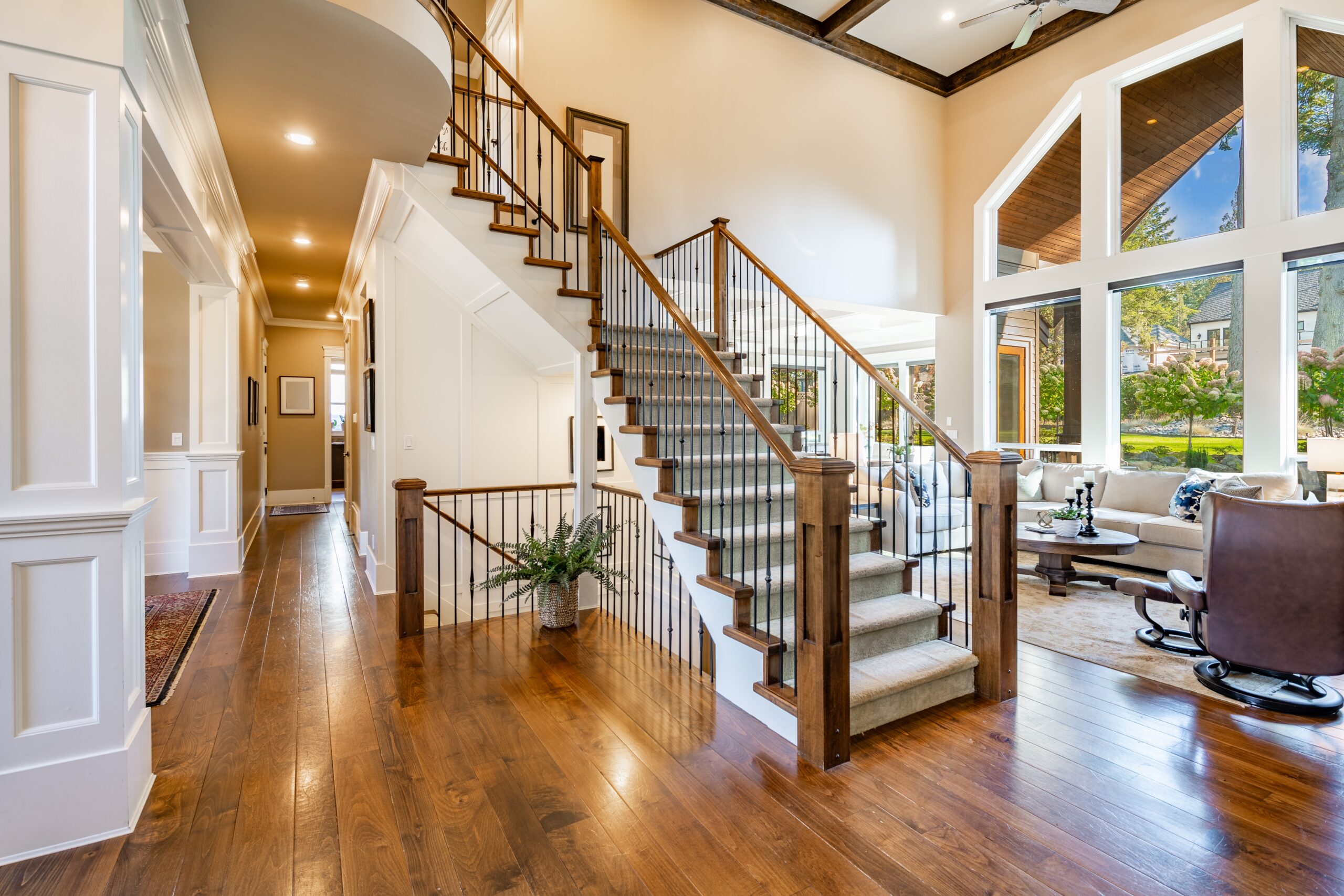
For years, cool gray flooring was an easy choice for homeowners looking for a clean, contemporary interior. Recently, flooring preferences have been shifting toward warmer colors, natural-looking finishes, and floors that make a room feel more inviting.
That doesn’t mean gray flooring is suddenly a bad choice or that every cool-toned floor needs to be replaced. Instead, many homeowners are looking for flooring that introduces more warmth and natural variation, especially in interiors that already rely heavily on white walls, cool finishes, and neutral furnishings.
Warm wood tones can provide that balance while still offering the versatility homeowners want from a long-term flooring choice.
Cool Gray Flooring Changed the Look of Modern Homes
Cool gray became popular because it worked easily with the neutral interiors that dominated contemporary design.
It paired well with:
- White cabinets
- Stainless steel appliances
- Cool-toned walls
- Minimalist furnishings
- Other gray and neutral finishes
For many homeowners, gray flooring also provided a middle ground between very light and very dark floors.
One misconception is that homeowners are suddenly rejecting gray altogether. In practice, the issue often comes down to undertones.
A gray floor with blue or silver undertones can feel noticeably cooler when combined with other cool finishes, particularly in rooms with limited natural light.
That does not make gray flooring a poor choice. It simply helps explain why some homeowners are now looking for flooring that introduces more warmth without requiring the entire room to be redesigned.
Warm Wood Tones Bring More Natural Variation
The appeal of warm wood tones isn’t limited to traditional brown flooring.
Today’s warmer flooring options can include:
- Natural oak
- Soft beige
- Honey tones
- Warm tan
- Muted brown
- Warm gray-brown
These colors can introduce warmth without creating the strongly orange or red appearance associated with some older wood floors.
Another important consideration is variation. Natural-looking flooring often includes several related shades rather than one completely uniform color. That variation can help the floor work with different furniture, cabinetry, and wall colors.
This can be particularly useful in open-concept homes. When one floor continues through the kitchen, dining area, and living room, an overly specific color can limit future decorating choices.
A balanced wood tone can provide more flexibility as furniture, paint colors, and other finishes change over time.
The Right Warmth Depends on the Room
A common mistake is choosing a floor simply because the sample is described as “warm.”
Warmth is relative to everything surrounding the flooring. White cabinetry, cream walls, gray furniture, natural wood furniture, and dark countertops can all make the same flooring sample appear different.
Before selecting a color, consider:
- Cabinet and trim finishes
- Wall colors
- Countertops and backsplashes
- Natural and artificial lighting
- Furniture and area rugs
- Flooring in adjoining rooms
It’s also helpful to view flooring samples under different lighting conditions and at different times of day.
A floor that looks neutral under showroom lighting may appear noticeably warmer in afternoon sunlight or cooler under certain artificial lighting.
The goal isn’t to find the warmest floor available. It’s to find a floor whose undertones work with the room’s permanent finishes and the overall look you want to create.
Flooring Material Still Matters More Than the Trend
A warmer color does not automatically make a flooring product appropriate for every room.
Hardwood, luxury vinyl, laminate, and other flooring products can all provide wood-inspired looks, but their performance characteristics and maintenance requirements differ.
The room and household should help determine the appropriate flooring material before color becomes the deciding factor.
| Flooring consideration | What to look for |
|---|---|
| Appearance | Natural grain, suitable undertones, and realistic variation |
| Maintenance | Cleaning requirements that fit the household |
| Traffic | A surface appropriate for daily use |
| Moisture | Material characteristics suited to the room |
| Design flexibility | A color that works with current and future furnishings |
| Installation | Product requirements and existing subfloor conditions |
A floor may have exactly the right color but still be unsuitable for the room’s moisture exposure, traffic level, or maintenance expectations.
For that reason, it makes sense to narrow down the appropriate flooring type first and then compare warm colors and styles within that category.
Plank Size and Grain Can Change the Look
Color receives most of the attention, but plank dimensions and surface details can dramatically change how a warm floor looks once installed.
Longer, wider planks can create a more open appearance, while smaller planks or stronger grain patterns can introduce more visual activity.
The same warm color can therefore produce very different results depending on the product.
When comparing flooring, look beyond a single plank and consider:
- Plank width and length
- Grain patterns
- Knots and character marks
- Color variation between planks
- Surface texture
- Repetition of printed patterns
That last point is particularly important with manufactured wood-look flooring.
A pattern that looks subtle on one sample can become much more noticeable when repeated throughout an entire room. Looking at several planks or a larger flooring sample together can provide a better sense of how the finished floor will look.
Existing Gray Flooring Doesn’t Always Need to Go
The growing interest in warmer flooring can create the impression that gray flooring immediately needs to be replaced.
That’s not necessarily the case.
If existing flooring is in good condition, homeowners may be able to introduce warmth through other elements of the room, including:
- Furniture
- Area rugs
- Wall color
- Lighting
- Decorative accents
- Natural wood furnishings
Replacement may make more sense when flooring is already worn, damaged, difficult to maintain, or no longer meets the homeowner’s needs.
Flooring is a longer-term decision than changing a wall color or accent piece. A functional floor doesn’t necessarily need to be replaced simply because another color is receiving more attention.
Choosing a Warmer Floor for Your Home
The shift away from cool contractor gray is less about declaring one flooring color outdated and more about creating interiors that feel warmer and more natural.
Warm wood tones can introduce depth and variation while complementing a wide range of cabinetry, furniture, paint colors, and other finishes.
If you’re considering new flooring, start with the practical needs of the room. Then compare colors, undertones, plank sizes, grain patterns, and textures to find a product that works with the rest of your home.
Trends can provide inspiration, but the best flooring choice is ultimately one that fits your space, your lifestyle, and the way you want your home to feel.
Frequently Asked Questions
Are warm wood tones replacing gray flooring completely?
No. Gray remains a viable flooring choice when its undertones work with the room. The growing interest in warmer colors reflects changing design preferences rather than a requirement to replace cool-toned floors.
Do warm floors work with gray furniture?
Yes. Warm flooring can provide contrast against gray furniture and help balance an otherwise cool palette. The specific undertones of both should be considered together.
Can warm wood tones work with white cabinets?
Yes. Natural oak, beige, and soft tan flooring can create contrast with white cabinetry without overwhelming it. Comparing flooring samples beside the actual cabinet finish can help you evaluate the combination.
Are wider planks always more modern?
Not necessarily. Wider planks can create a more open appearance, but the overall effect also depends on grain, color variation, texture, and surrounding finishes.
Can warm wood flooring work in an open-concept home?
Yes. A balanced wood tone can visually connect kitchens, dining areas, and living spaces without requiring every piece of furniture to match the floor. When choosing one flooring product for several connected rooms, consider how its undertones work with the permanent finishes throughout the entire area.
Carpet Land | Flooring Installation in Omaha, Lincoln & Sioux Falls | Best Prices on Carpets, Flooring & More
At Carpet Land, we make shopping for flooring in Omaha, Lincoln, and Sioux Falls easy and affordable. Whether you’re designing a new playroom or upgrading your entire home, our team is here to guide you through every step, from selection to installation.
- Free Estimates & Design Consultations
- Top Brands at the Best Prices
- Playroom Flooring Experts with 30+ Years of Experience
- Huge In-Stock Selection Ready for Immediate Installation
Contact us for your FREE Estimate TODAY.
Click here for the Carpet Land Flooring Buying Guide