
Choosing a wood-look tile often begins with color, texture, and plank size. However, one of the most important design decisions happens after the tile has already been selected.
A question homeowners frequently ask is how to add more visual interest without introducing another flooring material or overwhelming the room with additional design elements. In many cases, the answer comes down to the installation pattern.
The same tile can create two very different looks depending on how it’s installed. Herringbone and brick patterns each add dimension, but they do so in very different ways.
In kitchens, entryways, and mudrooms, where cabinetry, storage, doorways, and architectural features already influence the space, selecting the right pattern can be just as important as selecting the right tile.
Herringbone Creates Movement and Becomes a Design Feature
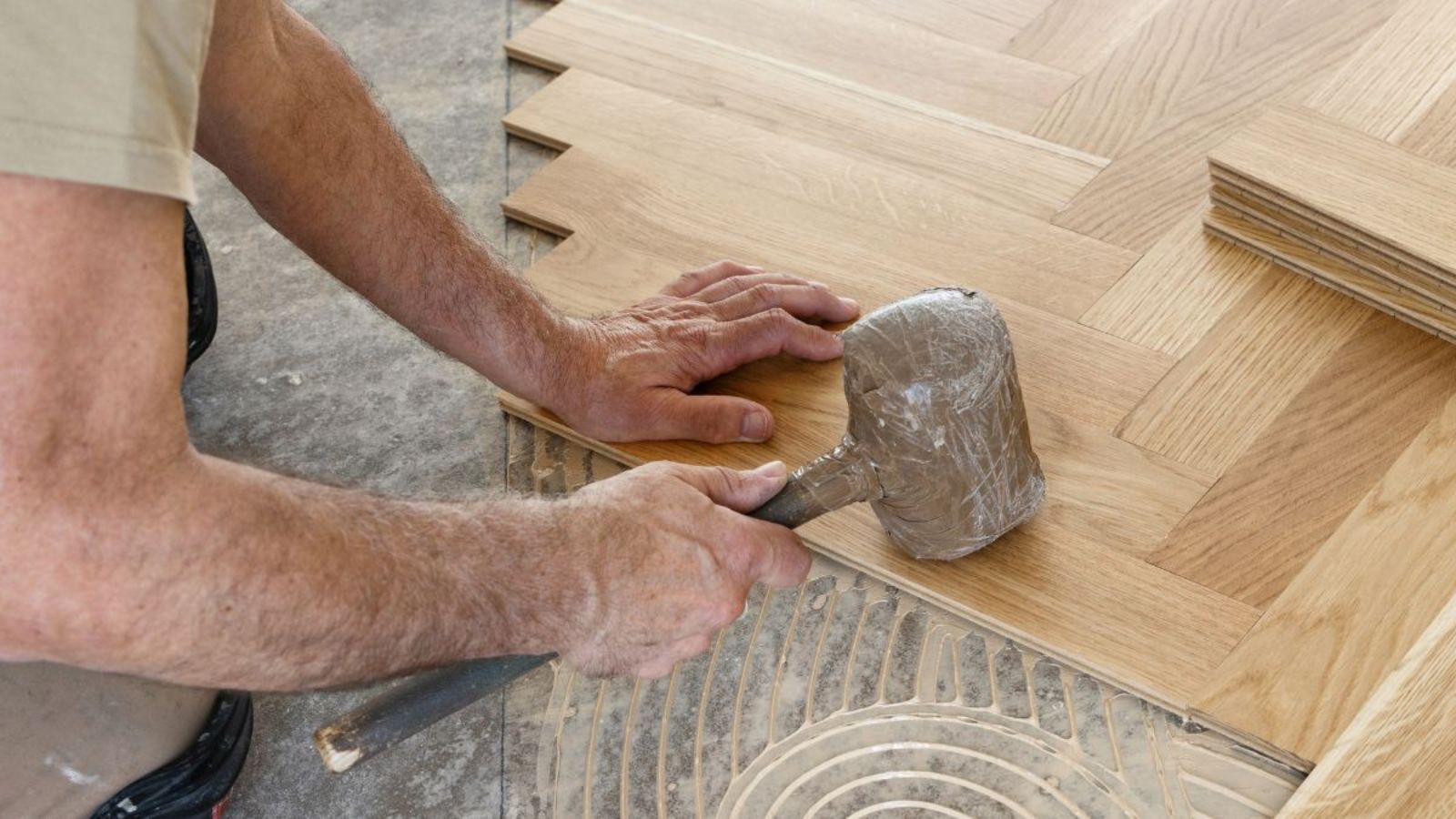
Herringbone layouts place rectangular tiles at alternating 90-degree angles to create a repeating zigzag pattern.
One misconception is that herringbone works only in large, open spaces. In reality, it can work exceptionally well in smaller rooms when the tile and surrounding finishes complement the pattern.
Unlike traditional straight or staggered installations, herringbone naturally draws the eye across the floor. This creates movement and often turns the flooring into one of the room’s most noticeable design elements.
The visual effect becomes stronger when the tile features:
- Pronounced wood grain
- Significant color variation
- Dark or contrasting grout
- Shorter plank dimensions
- Distinct printed details
The opposite is also true.
A wood-look tile with softer grain patterns and more consistent coloring can create a much more subtle herringbone installation. This is why viewing only a single sample can sometimes be misleading. A pattern that appears understated in a showroom sample may create a much stronger visual impact once it’s repeated across an entire room.
Brick Patterns Create Structure Without Dominating the Space
Brick patterns, sometimes called staggered or offset layouts, create a more traditional appearance by shifting each row slightly from the one beside it.
Compared with herringbone, brick installations feel more structured and less directional.
The offset joints still create variation, but they allow the wood appearance itself to remain the focal point rather than emphasizing the geometric layout.
A brick pattern may be a better choice when:
- A quieter design is preferred
- The tile’s wood appearance should remain the primary focus
- Cabinetry or wall finishes already provide visual detail
- The room includes multiple competing design elements
Many homeowners assume brick is simply a less complicated version of herringbone. In reality, each layout creates a very different aesthetic, even when using the exact same tile.
Comparing Herringbone and Brick Patterns
| Feature | Herringbone | Brick Pattern |
|---|---|---|
| Visual effect | Creates movement and becomes a focal point | Adds dimension while maintaining a more traditional appearance |
| Best suited for | Statement floors and contemporary spaces | Classic, transitional, and multipurpose spaces |
| Installation complexity | More complex | Less complex |
| Material waste | Typically higher because of additional cuts | Typically lower |
| Overall appearance | Bold and architectural | Clean and understated |
Let the Room Influence the Pattern
The layout should always reflect the room itself.
Permanent architectural features such as cabinets, islands, built-in storage, and doorways influence how the flooring will ultimately be seen.
Kitchens
In kitchens, the island often becomes the visual anchor. A herringbone installation can complement simpler cabinetry, while a brick pattern may help balance a kitchen that already includes decorative backsplashes, detailed cabinet profiles, or multiple finish materials.
Entryways
In entryways, flooring transitions become particularly important. Since the floor is often one of the first design elements visitors notice, the layout should create a welcoming first impression without competing with nearby finishes.
Mudrooms
In mudrooms, benches, cubbies, hooks, and storage cabinets already establish strong horizontal and vertical lines. A brick pattern can often add enough variation without creating another dominant geometric feature.
Before selecting a layout, consider:
- The most visible areas of the floor
- Doorways and transitions
- Cabinet placement
- Flooring in adjoining rooms
- Existing architectural details
The goal isn’t to select the most dramatic pattern. The goal is to select the pattern that works best within the space.
Grout and Tile Size Can Completely Change the Finished Look
Another factor homeowners frequently overlook is grout.
Grout affects much more than the spaces between the tiles.
A grout color that closely matches the tile can soften the appearance of the joints and create a more continuous wood effect. Contrasting grout creates stronger separation between each tile, making the pattern itself much more noticeable.
Tile dimensions also influence the final result.
Longer planks create a different rhythm than shorter rectangular pieces. A highly varied wood grain paired with a smaller tile may produce a much busier installation than expected.
When comparing wood-look tile patterns, it’s helpful to evaluate:
- Tile size
- Wood grain variation
- Grout color
- Cabinet finishes
- Wall colors
- Natural lighting
Looking at several full-sized tiles together provides a much more realistic impression than evaluating a single sample.
Installation Planning Matters as Much as Tile Selection
Choosing a pattern is only one part of the tile installation process.
Patterned layouts require careful planning because the arrangement repeats throughout the room. Small decisions can become very noticeable once the installation is complete.
Before the first tile is installed, the layout should account for:
- Starting points
- Cabinet lines
- Doorways
- Transitions
- Partial tiles
- Adjacent flooring materials
- The location of highly visible cuts
Herringbone installations typically require additional planning because of their changing angles and increased number of cuts.
Brick layouts are generally more straightforward, but alignment still remains important.
This is another reason why many homeowners benefit from viewing products in person. Comparing samples, discussing layouts, and seeing how different installation patterns interact with specific tile selections often leads to better long-term decisions.
Choosing the Right Pattern for Your Home
There isn’t a universally better pattern.
Herringbone creates movement and makes the floor itself part of the room’s design story. Brick layouts provide structure and allow the natural wood appearance of the tile to remain the focal point.
The right choice depends on the room, the surrounding finishes, the size of the tile, and the overall design goals.
Whether you’re updating a kitchen, redesigning an entryway, or creating a more functional mudroom, selecting the appropriate installation pattern can dramatically influence how the finished space feels.
Frequently Asked Questions
Does a herringbone pattern require more tile?
In many cases, yes. Herringbone installations often involve more cutting, which can increase material waste. The exact amount depends on the room layout, tile dimensions, and the number of obstacles or transitions.
Is a brick pattern better for smaller rooms?
Not necessarily. Both layouts can work in smaller spaces. The decision should be based on the room’s existing features, the tile itself, and the desired visual effect.
Can different tile patterns be used in adjoining rooms?
Yes. Using different layouts with the same tile can create visual separation while maintaining consistency throughout the home. Transitions should be planned carefully so the change feels intentional.
Should the flooring pattern be centered on a kitchen island?
Often, yes. Because the island typically serves as the focal point, many installations are planned around it to create a more balanced appearance.
Is wood-look tile a good choice for mudrooms?
Yes. Wood-look tile offers the appearance of hardwood while providing the durability and moisture resistance that many homeowners appreciate in high-traffic spaces such as mudrooms.
Carpet Land | Flooring Installation in Omaha, Lincoln & Sioux Falls | Best Prices on Carpets, Flooring & More
At Carpet Land, we make shopping for flooring in Omaha, Lincoln, and Sioux Falls easy and affordable. Whether you’re designing a new playroom or upgrading your entire home, our team is here to guide you through every step—from selection to installation.
- Free Estimates & Design Consultations
- Top Brands at the Best Prices
- Playroom Flooring Experts with 30+ Years of Experience
- Huge In-Stock Selection Ready for Immediate Installation
Contact us for your FREE Estimate TODAY.
Click here for the Carpet Land Flooring Buying Guide