
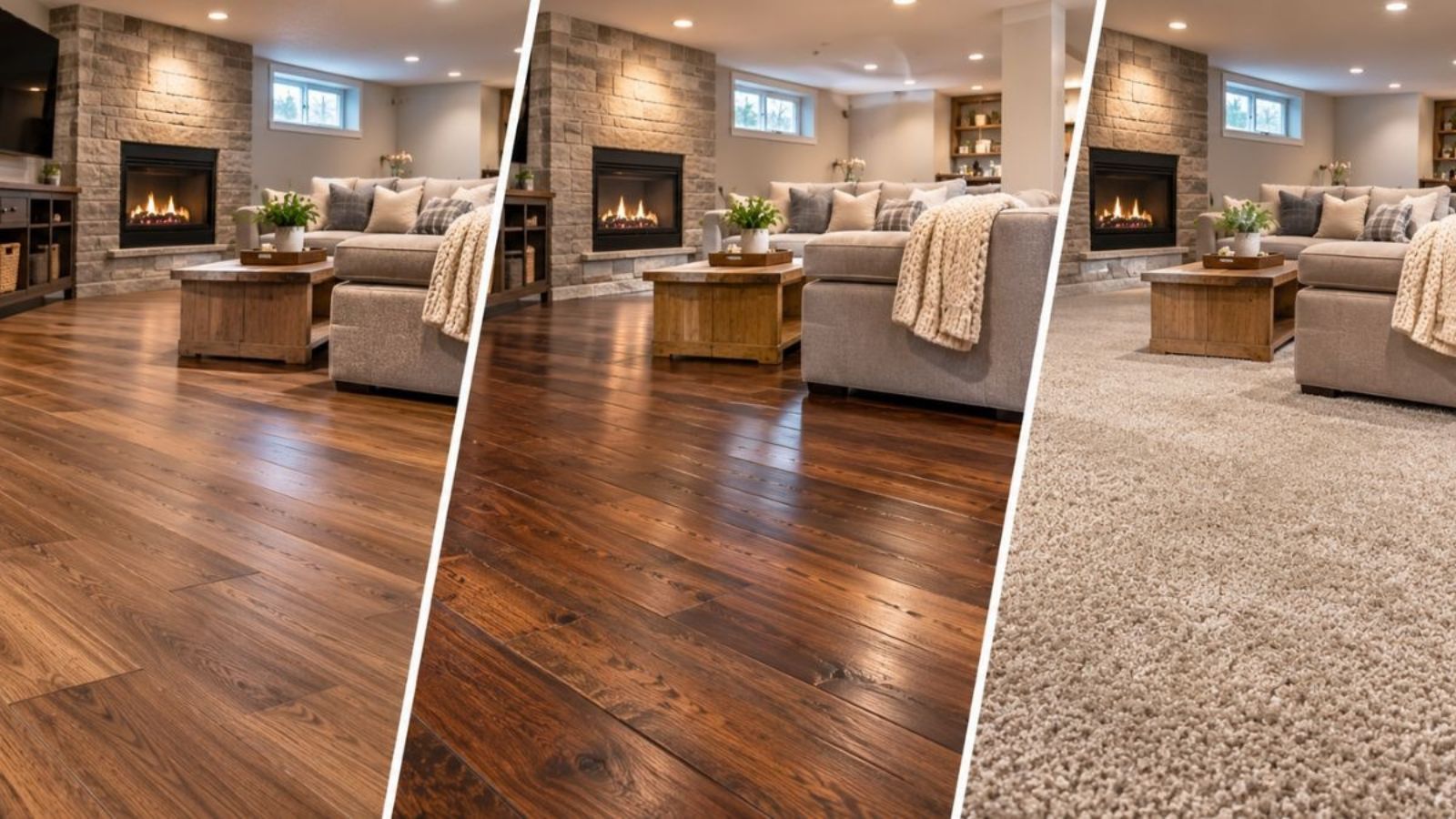
Choosing basement flooring involves more than finding a material that looks good. Below-grade spaces can experience moisture, temperature changes, and limited ventilation, all of which can affect flooring performance. Among basement flooring options, engineered hardwood, solid hardwood, and carpet each offer distinct advantages and limitations.
The right choice depends on the basement’s condition, how the space will be used, and the amount of maintenance the homeowner is willing to handle. Understanding how each material responds to basement conditions can help prevent costly problems and support a more practical renovation.
Why Basement Conditions Matter
Basements have different environmental conditions from above-ground rooms. Moisture vapor can pass through concrete slabs, while humidity, condensation, and occasional water intrusion can affect flooring materials.
Before selecting a floor covering, check for signs of moisture problems, including:
- Musty odors or persistent dampness
- White mineral deposits on concrete walls or floors
- Water stains or visible discoloration
- Condensation around windows and pipes
- Evidence of previous leaks or flooding
Evaluating flooring options for basements starts with identifying moisture concerns and checking whether the subfloor is ready for installation. A moisture assessment can help determine whether the concrete slab and surrounding space are suitable for flooring. Any leaks, drainage problems, or excessive humidity should be addressed first.
These conditions matter because flooring materials react differently to moisture. Some are more dimensionally stable, while others can absorb water, swell, or retain dampness.
Engineered Hardwood: Pros and Cons
Engineered hardwood has a real wood surface attached to a core made from layers of wood, plywood, high-density fiberboard, or other engineered materials. This construction generally makes it more dimensionally stable than solid hardwood when humidity levels change.
Advantages include:
- Natural appearance: It provides the look and texture of real wood.
- Greater stability: Its construction helps reduce expansion and contraction.
- Design variety: It comes in different wood species, finishes, plank widths, and colors.
- Installation flexibility: Certain products offer installation methods suited to different subfloor conditions.
However, engineered hardwood is not inherently waterproof. Excessive moisture can still damage its wood surface or core, and some products cannot be refinished because their real wood veneer is too thin.
Not every engineered hardwood product is suitable for basement installation. Check the manufacturer’s below-grade installation requirements and moisture specifications before purchasing. Depending on the product and installation method, the subfloor may also need an approved moisture barrier or underlayment.
Solid Hardwood: Pros and Cons
Solid hardwood is made from a single piece of natural wood. Its appearance, durability, and ability to be refinished make it a popular choice for living rooms, bedrooms, and other above-ground spaces.
Its main advantages include:
- Long-term durability: Properly maintained hardwood can last for decades.
- Refinishing potential: Many solid wood floors can be sanded and refinished several times.
- Natural character: Each plank has distinct grain patterns and variations.
The main concern in a basement is moisture. Solid hardwood absorbs and releases moisture as environmental conditions change. This can cause planks to expand, contract, cup, or buckle.
Because basements are more vulnerable to moisture-related problems, solid hardwood is generally not recommended for below-grade installation. Even with moisture-control measures, the risk may make it a less practical choice than other materials.
Explore Carpet Land’s selection of solid and engineered hardwood flooring to compare wood species, finishes, construction types, and installation options.
Carpet: Pros and Cons
Carpet is often considered for finished basements because it makes the space feel warmer and more comfortable. Its soft surface is suitable for areas where people relax, watch television, or spend time with family.
Advantages include:
- Comfort: Carpet provides a cushioned surface for walking, sitting, and playing.
- Sound absorption: It helps reduce noise, which can be useful in entertainment rooms and family spaces.
- Warmth: It feels less cold underfoot than concrete or hard flooring.
- Design options: Different colors, textures, and pile styles make it easy to coordinate with the room.
However, carpet can retain moisture, especially when water reaches the backing or padding. Prolonged dampness can lead to unpleasant odors and may encourage mold growth. Spills and water damage can also be more difficult to address than on hard flooring.
The carpet backing and padding matter, too. Some materials can retain moisture against the subfloor, making proper moisture assessment essential before installation. Carpet is best suited to basements that are consistently dry and have no unresolved water problems.
Browse Carpet Land’s carpet flooring options to compare carpet styles, fibers, and padding options for your finished basement.
Comparing Basement Flooring Options
Each material has different installation requirements and potential problems when exposed to basement moisture. This comparison highlights practical considerations beyond appearance and comfort.
| Basement Consideration | Engineered Hardwood | Solid Hardwood | Carpet |
|---|---|---|---|
| Subfloor requirements | Flat, stable subfloor with moisture levels within product limits | Dry, stable subfloor; generally unsuitable for below-grade installation | Dry, properly prepared subfloor with suitable backing or padding |
| Moisture risks | Can swell, warp, or delaminate when exposed to excessive moisture | Can cup, warp, or buckle | Padding and backing can retain moisture |
| Installation limits | Must be approved for below-grade use | Generally unsuitable below grade | Best for consistently dry basements |
| Water damage | Damaged planks may need replacement | May require board replacement or refinishing after drying | Wet carpet and padding may require replacement |
| Maintenance | Wood-safe cleaning products; avoid standing water | Humidity control, wood-safe cleaning, and refinishing as needed | Regular vacuuming and prompt spill cleanup |
| Best application | Dry, finished living areas with suitable installation conditions | Better suited to above-ground rooms | Dry family rooms and bedrooms |
These flooring materials differ in how they handle moisture, daily wear, and maintenance. The best fit also depends on how the basement will be used.
Matching Flooring to Basement Use
The function of the basement should guide the flooring decision. A room used for family activities may need different features from a space designed as a guest bedroom or entertainment area.
| Basement Condition or Need | What to Consider | Flooring Implication |
|---|---|---|
| Concrete slab with elevated moisture | Test moisture levels and address the source | Delay installation until conditions meet product requirements |
| Basement with occasional spills | Consider how easily the surface can be cleaned and dried | Suitable hard-surface flooring may be easier to clean than carpet |
| Room used for movies or gaming | Consider sound absorption and underfoot comfort | Carpet can help reduce room noise |
| Basement used daily by children or pets | Consider stain resistance, cleaning, and wear | Compare durable carpet with approved hard-surface options |
| Uneven concrete floor | Assess whether subfloor preparation is needed to meet flatness requirements | Installation preparation may affect material suitability |
| Limited maintenance time | Consider cleaning needs and repair requirements | Choose a surface that fits the household’s upkeep routine |
Other household needs can influence the decision. Homes with pets or children may benefit from surfaces that are easier to clean, while rooms with heavy furniture may require flooring that can withstand concentrated weight without excessive indentation or damage.
Lighting and room size are also worth considering. Lighter flooring can make a basement feel more open, while wider planks or coordinated carpet colors can help create a more consistent look.
Getting the Best Basement Flooring Performance
The right basement flooring should balance appearance, comfort, and durability. Engineered hardwood offers a natural wood look when approved for below-grade installation. Carpet provides warmth and sound absorption, while solid hardwood is generally less suitable because moisture can cause it to warp or buckle.
Before making a decision, consider how the space will be used. A family room may benefit from carpet’s comfort, while a finished living area may suit engineered hardwood. Homeowners who are concerned about moisture resistance may also want to explore other flooring materials, such as luxury vinyl products approved for below-grade installation.
Have the basement checked for moisture issues before installation. A flooring professional can also assess the subfloor and help determine which materials meet the manufacturer’s installation requirements.
Explore more basement flooring options at Carpet Land to find a material that suits your space, lifestyle, and budget.
Carpet Land | Flooring Installation in Omaha, Lincoln & Sioux Falls | Best Prices on Carpets, Flooring & More
At Carpet Land, we make shopping for flooring in Omaha, Lincoln, and Sioux Falls easy and affordable. Whether you’re designing a new playroom or upgrading your entire home, our team is here to guide you through every step—from selection to installation.
- Free Estimates & Design Consultations
- Top Brands at the Best Prices
- Playroom Flooring Experts with 30+ Years of Experience
- Huge In-Stock Selection Ready for Immediate Installation
Contact us for your FREE Estimate TODAY.
Click here for the Carpet Land Omaha, Lincoln, & Sioux Falls Flooring Buying